
The Algorithmic War Trade: How AI Hedge Funds Profit from Missile Alerts
-
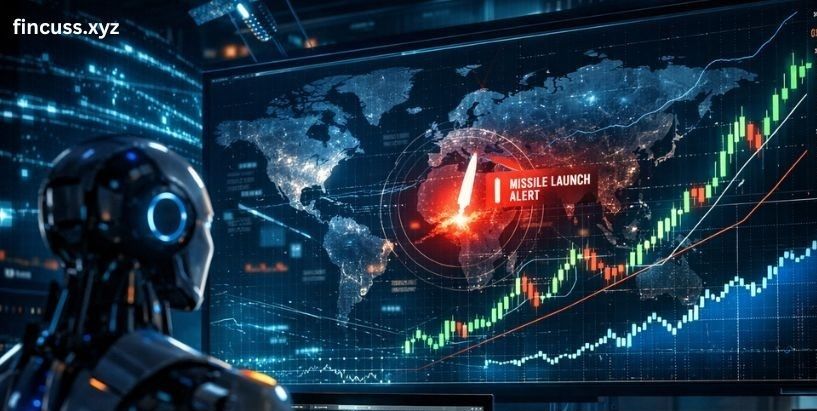
Imagine it is 2:50 AM. While the world sleeps, a missile alert flashes across a global monitoring system. Within a few heartbeats, long before a human analyst can even process the news, sophisticated artificial intelligence has already moved millions of dollars. Welcome to the era of algorithmic warfare, where geopolitical crises are no longer just tragedies but high-speed trading signals.
The Core Secret: Why Speed Is the New Currency
In the modern financial landscape, the difference between a massive profit and a crushing loss is measured in milliseconds. Traditional traders who rely on their gut instincts and experience are being outpaced by quantitative models used by giants like Citadel, Renaissance Technologies, and Two Sigma.
- Human Reaction: Takes seconds or even minutes to read and react.
- AI Reaction: Executes in milliseconds, catching market shifts before they fully materialize.
By being the "first mover," these algorithms capture the initial price spike of an asset, essentially "beating the crowd" to the finish line.
The Profit Blueprint: How Money is Made
You might wonder exactly how these systems squeeze profit from a crisis. It isn't just about luck; it is a calculated, multi-step process:
-
Automated Interpretation: Using Natural Language Processing (NLP), algorithms scan news and social media for "trigger words," such as "missile strike" or "military escalation." The moment these appear, the AI evaluates the impact and trades instantly.
-
Playing Both Sides of the Market: AI hedge funds often use a dual strategy. They "go long" (buy) on assets expected to rise, such as oil or defense stocks, while simultaneously "shorting" (betting against) assets like airline or tourism stocks.
-
Exploiting Information Asymmetry: By using "secret" data networks, such as high-resolution satellite imagery from Planet Labs, AI can spot military movements or oil infrastructure damage before it hits mainstream news. If you know a pipeline is damaged five minutes before the rest of the world, you can buy oil futures at a "cheap" price and sell them once the news breaks and the price jumps.
Identifying the Winners and Losers
Geopolitical conflict creates predictable patterns that AI is designed to exploit. By studying past events, such as the Russia-Ukraine War and the attack on Saudi Aramco, algorithms learn how markets react to shockwaves.
The "First Winners"
- Defense Contractors: Stocks for companies like Lockheed Martin, Northrop Grumman, and Raytheon typically climb as investors anticipate increased military spending.
- Energy Markets: Oil futures often surge when there is a threat to supply lines.
The "Hidden Losers"
- Airlines & Tourism: Security concerns and rising fuel prices usually cause these shares to drop.
- Emerging Markets: These often experience capital outflows as investors seek "safer" ground.
The Ethical Edge and the Future of Prediction
As these systems grow more powerful, the line between financial analysis and geopolitical intelligence blurs. While firms like Palantir provide deep data analytics to help identify these signals, the rise of "war trading" raises significant ethical questions about monetizing instability.
The next frontier? Prediction. Organizations like OpenAI and Google DeepMind are developing models that may eventually be able to predict a conflict before the first missile is even launched.
Conclusion
In today's digital economy, financial battlefields are computational. Geopolitical tension has been converted into a stream of data where the fastest algorithm wins. While we may see a crisis, the AI sees a high-probability trade. In this high-stakes game, information is valuable, but the ability to act on it first is the ultimate weapon.